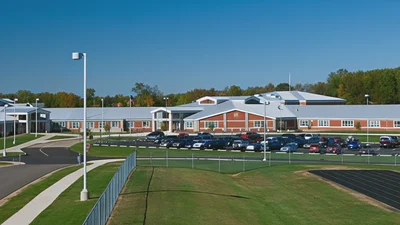
Mount Vernon City Schools are inviting community members to learn more about a proposed 1% earned income tax levy designed to support major building improvements across the district.
If approved, the levy would fund the construction of three new elementary schools and renovations to Mount Vernon High School. District leaders emphasize that these updates are part of a long‑term plan to provide safe, modern learning environments for students.
According to school officials, the earned income tax would apply only to wages and income, not to pensions, Social Security, or investment income. The measure is intended to create a more stable and predictable source of funding for facility projects.
“The 1% earned income tax would generate approximately $5,977,339 annually," the District stated. "Mount Vernon City Schools is also partnering with the Ohio Facilities Construction Commission (OFCC). The state is expected to contribute about 36% of the eligible project costs, or nearly $40 million, helping reduce the local share.”
The proposal comes after a year‑long review by the Facility Advisory Committee, a group of parents, staff, and community members who toured every building in the district. Their findings highlighted five key challenges in elementary facilities: safety, operational efficiency, aging infrastructure, instructional space, and student support. Many of Mount Vernon’s elementary schools were built between 1904 and 1958, with two now more than 100 years old. While the district’s maintenance team has worked diligently to preserve these buildings, mechanical, HVAC, and structural systems are beyond their typical life cycle, and several schools will soon require new roofs.
Older facilities also lack modern safety features such as secure entry vestibules and clear interior sight lines. Arrival and dismissal patterns are complicated by limited traffic flow areas, while instructional spaces often double in function—gymnasiums serving as cafeterias, for example. Programs like speech therapy, STEM learning, and gifted education frequently take place in shared or adapted rooms rather than spaces designed for those purposes.
District leaders stress that while these schools carry history and tradition, they were not built for the demands of today’s education. The levy proposal reflects thoughtful planning to ensure Mount Vernon’s facilities match the quality of instruction offered, both now and for decades to come. Community involvement remains essential as residents review information, ask questions, and help shape the future of local schools.