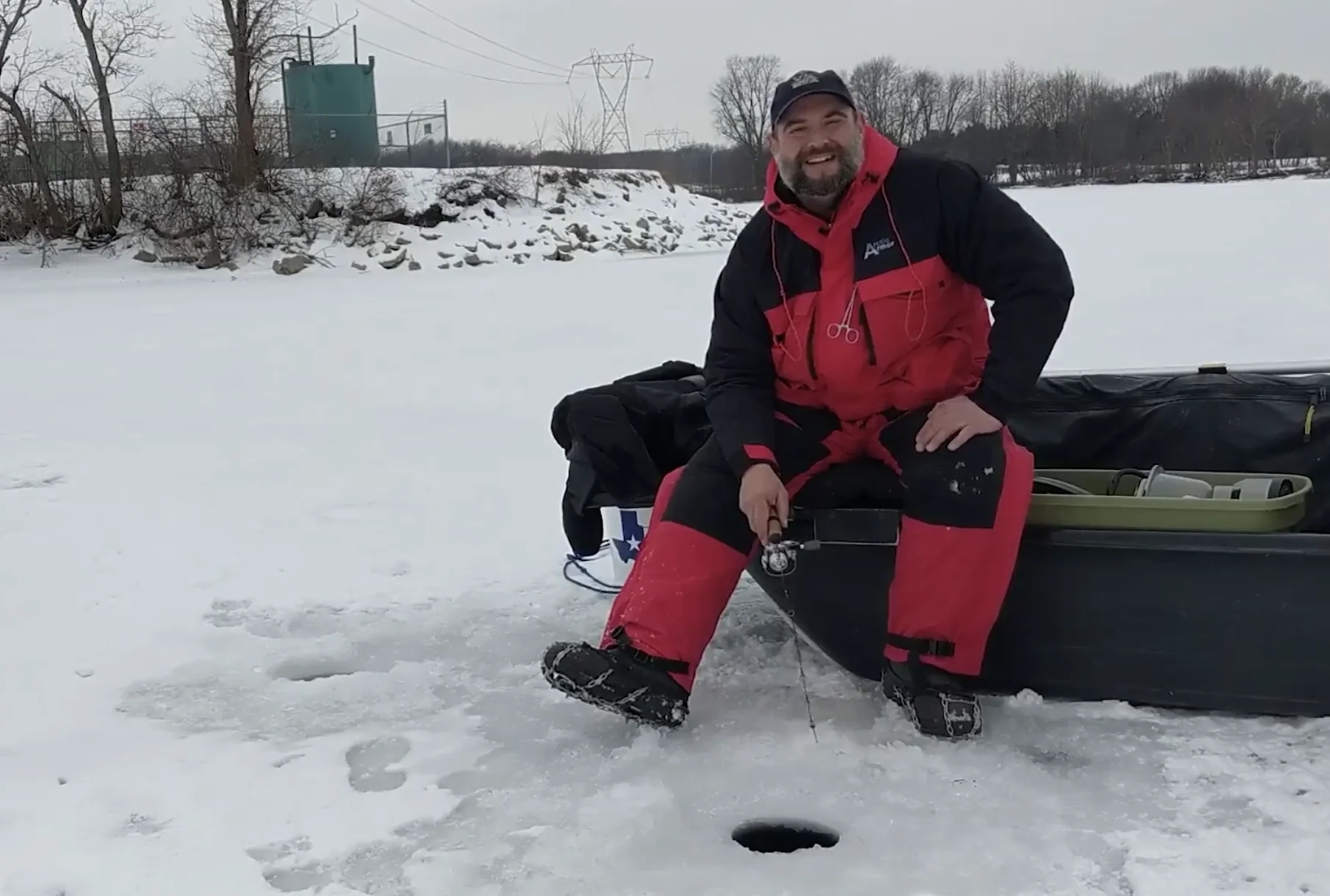
As winter grips Ohio, anglers are heading to inland lakes, ponds and Lake Erie for ice fishing.
While the sport can be rewarding, safety is crucial and many first-timers hire licensed guides for shelter, gear and help locating fish.
Still, most ice anglers in Ohio are local homegrown enthusiasts willing to venture out onto the ice on their own.
For those looking to stay safe and bring home fresh fish, Cameron McCune, a Fish Management Technician with the Ohio Department of Natural Resources (ODNR), has created a series of YouTube videos offering tips and guidance for ice anglers.
“You might think this looks a little silly, spending the day out on a frozen lake in the middle of winter, but ice fishing actually happens to be quite a bit of fun and it's a great way to put some extra food on the table,” McCune notes in the video series. “Nothing's better than fresh fish brought through the ice. We're out here trying to contact a few panfish for the purpose of putting some food on our table.”
Fish remain active under the ice, though they feed less than in warmer months. Anglers often find success near warmer water at the bottom and around surviving aquatic vegetation, which provides both cover and oxygen. ODNR emphasizes caution when heading onto frozen waters.
“This is a really relatively safe sport, and I hope that you take it up and enjoy it,” McCune said.
McCune offers practical tips for assessing conditions.
“As far as ice you would consider safe to walk on, we recommend four inches of ice to support an angler with his basic gear,” McCune said. “And that's four inches of nice, clear ice on a cold day, let's say 25 degrees or below. You're going to have to be mindful of the conditions that you have around. Waterfowl are notorious for keeping areas of water open out on these lakes, and having an idea of where those places might be is really a good thing to know. Areas where bridges and docks and things like that might exist, and places where currents are, are places that you may want to consider avoiding or checking very closely before traversing them.”
To illustrate how anglers can evaluate ice safety firsthand, McCune demonstrates a practical technique for testing the ice before venturing further.
“I'm out here today checking out some new ice, and you'll notice that I'm using a spud bar,” he said. “We use the spud bars to make sure that the ice is safe enough to walk on, and I know with this spud bar that one good, solid hit and the ice is strong enough to support my weight. So if, while using this spud bar, I hit the ice and it goes through, immediately start walking backwards, retracing the steps that you used to walk out. Now, I'll say in my personal experience, 25 plus years on the ice, I've never had a situation where a true emergency had arisen. Never been involved in anything that anybody else has even been involved in.”
Preparing a fishing spot is another key step. McCune recommends using an ice auger to drill holes and an ice skimmer to clear them.
“The variety of size [augers] that you are gonna find generally ranges from four inches all the way up to 10 inches,” he said. “The one I prefer to use is a seven-inch auger. That gives me quite a bit of options as far as being able to either pan fish and fish for things that are much larger, including northern pike and channel catfish. They're fairly easy to operate, to drill a hole. Keep it perfectly vertical, and just drill in a steady motion. So another tool that you're going to need, in addition to your auger, is an ice skimmer. The purpose of this is to clean your hole out so that you are not trying to drop baits down through ice in your hole. The other thing I use my skimmer for is I've actually put marks on it to indicate how many inches of ice that we have under us.”
Once the holes are drilled, McCune explains how to measure ice thickness and locate the best fishing spots safely.
“Now generally we recommend about four inches to safely support people on the ice, up to 200 pounds or more,” he said. “What you're looking for is good, hard, clear ice.”
For beginners, McCune says ice fishing gear can be simple and inexpensive.
“A bucket with a lid is a really great thing to have to store bait, gear, and also doubles as a seat if you need that,” he said. “Some basic ice fishing equipment, some of which will include a small tackle box, you really don't need much, you know, some pin men's, hooks, split shots, things like that that you would typically use even in open water. Some of your open water gear can double as ice fishing gear as well. A sled, you don't have to go out and buy some special sled for ice fishing; a lot of people, especially if you have kids, may even have a sled around your garage. That would work just fine to get you out on the ice.”
He also breaks down the essential gear, showing that beginners don’t need much to get started on the ice.
McCune emphasizes that simple tackle is often all that’s needed, including short rods, light line, small baits and tip-ups.
“Ice fishing rods tend to be small, you can get them relatively inexpensively, $15-$20 will get you a little combo to get started,” McCune said. “Some small ice fishing jigs, generally you can get these for within a couple dollars. And live bait, these little bait pucks are great, and it's a great way to keep your bait not only alive, but keeps you from mashing bait containers in your pocket. See if there's anything else. An ice skimmer. This is an item that will run you five or six dollars. So really you can get out and do this for very little initial investment. And if you find out that you like it, there's always ways to spend more money.”